

the rising action
what is act 2 for?

Some housekeeping first: I will be co-hosting a writing retreat with the brilliant Elle’s Writing Club in Tuscany in July - if you’re interested you can find more info here.
So a couple of weeks ago we had a discussion of first acts/expositions. What they do and why they matter, how they create context for the inciting incident and generate stakes by depicting the status quo. We also talked about inciting incidents: what they do, where they fall and how they get the ball rolling.
This week I want to talk about the second act of a five-act structure: what is often referred to as the rising action.
make me care
The purpose of this second act is to have the inciting incident ricochet off that which was established in the first act, destabilising, inverting or disrupting the status quo. Act 2 accelerates away from act 1, and in so doing it provides much of the emotional heavy lifting of the story. Act 2 is where we should be starting to really feel something: if act 1 is ‘show me who these people are’ then act 2 is ‘now make me care about them. Desperately.’
This is the act that does the legwork of making us emotionally invest in the story.
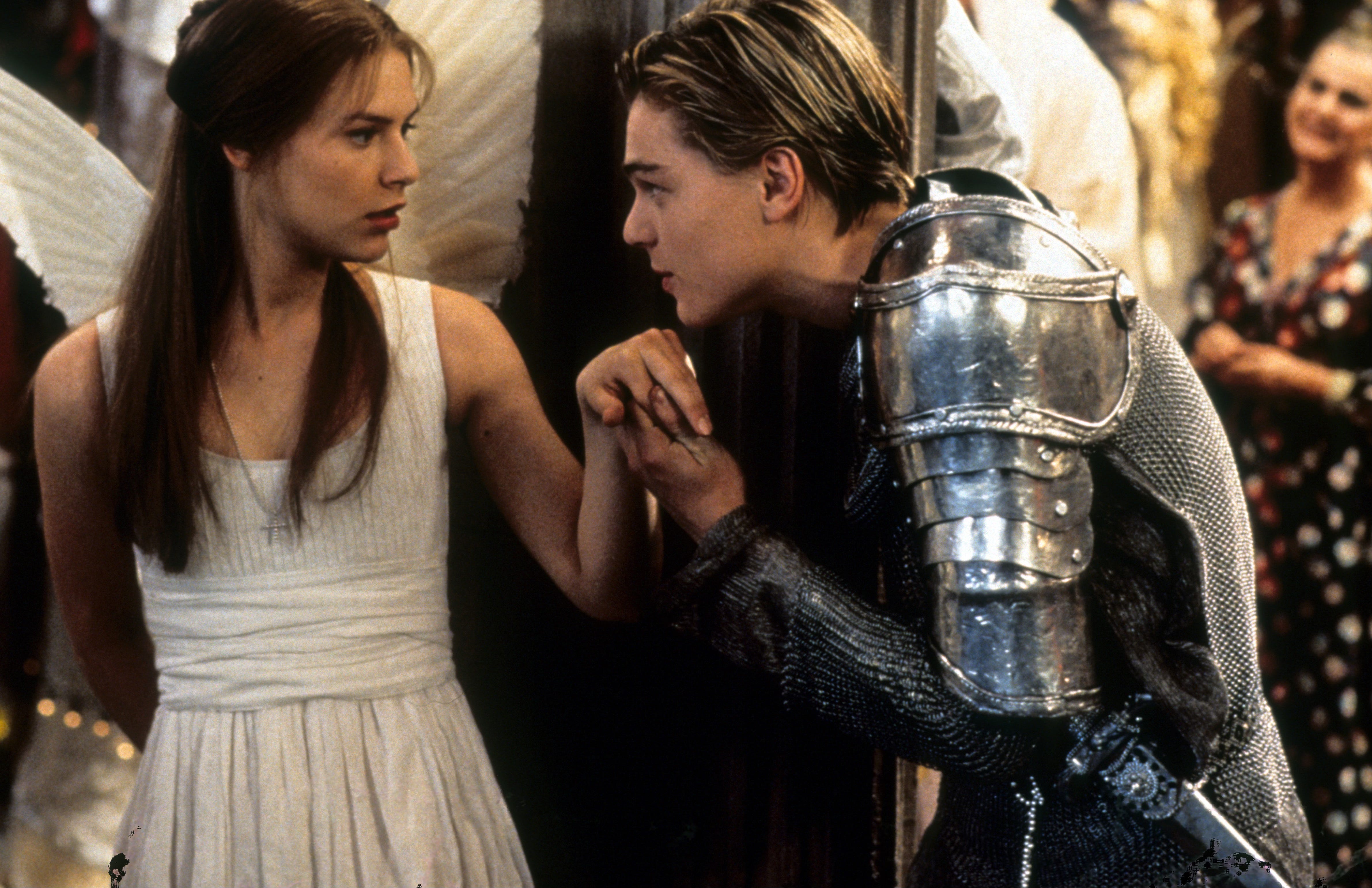
One way of thinking about that emotional investment is to frame Act 2 in terms of its conflict with Act 1. Let’s take the example of Romeo and Juliet1. Act 1 was all about setting up the context: the feud between the Capulets and Montagues, Romeo’s tendency towards pointless crushes, the pressure on Juliet to get married. Romeo goes to the Capulets’ party and in Act 1 Scene 5, and voila, we have our inciting incident. The two lovers meet, fall instantly in love, and nothing will ever be the same again. Now: act two.
So how does act 2 conflict with act 1? Well, we see what change has been effected by the inciting incident, how act 1 has been turned on its head. In the case of Romeo and Juliet, in Act 2 scene 1 we see Mercutio and Benvolio mocking Romeo’s love for Rosalind, to which Romeo responds ‘he jests at wounds that never felt a scar’. We have emphasised for us the difference between who Romeo was ten minutes ago, before the inciting incident, and who he is now, in the wake of meeting Juliet.
Then, of course, we have the famous balcony scene, with some of the play’s finest poetry, not to mention its most iconic visual tableau. When you think about Romeo and Juliet, the image that floats into your mind is probably from act 2. We see Juliet, thinking herself unobserved, passionately declaring her love. Not long ago she was pliant and politic, prepared to do whatever her parents thought best; now she is willing to risk and renounce it all. Romeo, unlike the inadequate, languishing boy of act 1, is able to meet her in kind. The two commit and agree to marry.
Romeo goes to Friar Lawrence and asks him to marry them, and Friar Lawrence sees this as a possible way to resolve the feud. Despite ourselves, even knowing ourselves to be spectators of a tragedy, we might allow ourselves to hope with him. The act ends with the marriage between Romeo and Juliet.
The play’s optimism reaches its peak, which might leave us either in agony at the prospect of what is to come, or hoping against hope that this time, somehow, it might turn out all right. Whatever we’re feeling, we ought to be feeling something. If the hope isn’t nurtured properly in act 2, then the despair won’t land as it should in acts 4 and 5, and the tragedy won’t have done its work.
act 1 in light of act 2
So we see how the contents of Act 1 (the feud, Romeo’s crush, Juliet’s marriage) speak to the contents of Act 2 in the wake of the inciting incident. Romeo is deeply, meaningfully in love with Juliet. Friar Lawrence is framing the feud as something that can potentially be solved. By the end of Act 2, Juliet is married, but not to the man who her parents were proposing. All the conditions of Act 1 have been subverted.
Imagine if we’d opened with the inciting incident - Romeo and Juliet meeting at the party. We wouldn’t have the context of the feud, so we wouldn’t know the stakes for them falling in love. We wouldn’t know that Romeo was a serial crusher and Juliet an obedient daughter, so we wouldn’t understand how much meeting has changed them both.
act 2’s relationship to genre
Let’s now contrast this with a story where things do end well - something like The Lord of the Rings or A New Hope, where good ultimately triumphs over evil. Here, the purpose of the second act is to make us feel the intensity of the peril. The second act of The Fellowship of the Ring, for example, is the hobbits’ most vulnerable period of the whole first instalment. They spend all of act 2 being chased across the Shire by Nazgul with barely a twig to hide behind. They meet a new, powerful protector in Strider, but even he can’t prevent Frodo from being grievously harmed by the Witch King. The forces of evil feel enormous, and good is comparatively fragile. Likewise, in A New Hope, Luke and Han spend most of the time being chased around by storm troopers before almost being crushed to death. Jeopardy is ramped up and the formidability of their foe is stressed comprehensively.
If we’re going to be incredibly simplistic about it, if you’ve got a happy ending in act five then things need to seem really bad in act 2, and if you’ve got a sad ending in act 5 then things need to seem really good in act 2. This translates across genre to some extent - if you’re writing a whodunnit in which the threads are going to be disentangled in act 5 and the whole puzzle will click into place, then act 2 is when things need to look really tangled and baffling.
Act 2 needs to be viewed in the context of the ending as well as the beginning.
Let’s get back to our pals in Jurassic Park
To recap act 1: we saw firsthand that the park was dangerous and that it’s already facing a lawsuit; we found out that it needs to be signed off by a lawyer and experts (enter Alan Grant); we saw Grant’s adverse relationship to children, Hammond’s boyish flippancy; we learned about Dennis’ plan to steal the embryos and we watched the gang have a bumpy landing at the park as Dr Malcolm uttered his gnomic warnings. We saw actual dinosaurs (inciting incident) and it all got very exciting.
So let’s have a look at act 2 and how it ricochets against act 1 to raise the stakes. Still on Netflix, you can still follow along if you want to. We left off the end of act 1 around the 23 minute mark, and we’re going to estimate that act 2 will have roughly the same duration. I’ll break it down into five parts as I did for act 1: within the act there is exposition, rising action, crisis, climax, conclusion.
Breakdown of act and writing exercise below the paywall:
